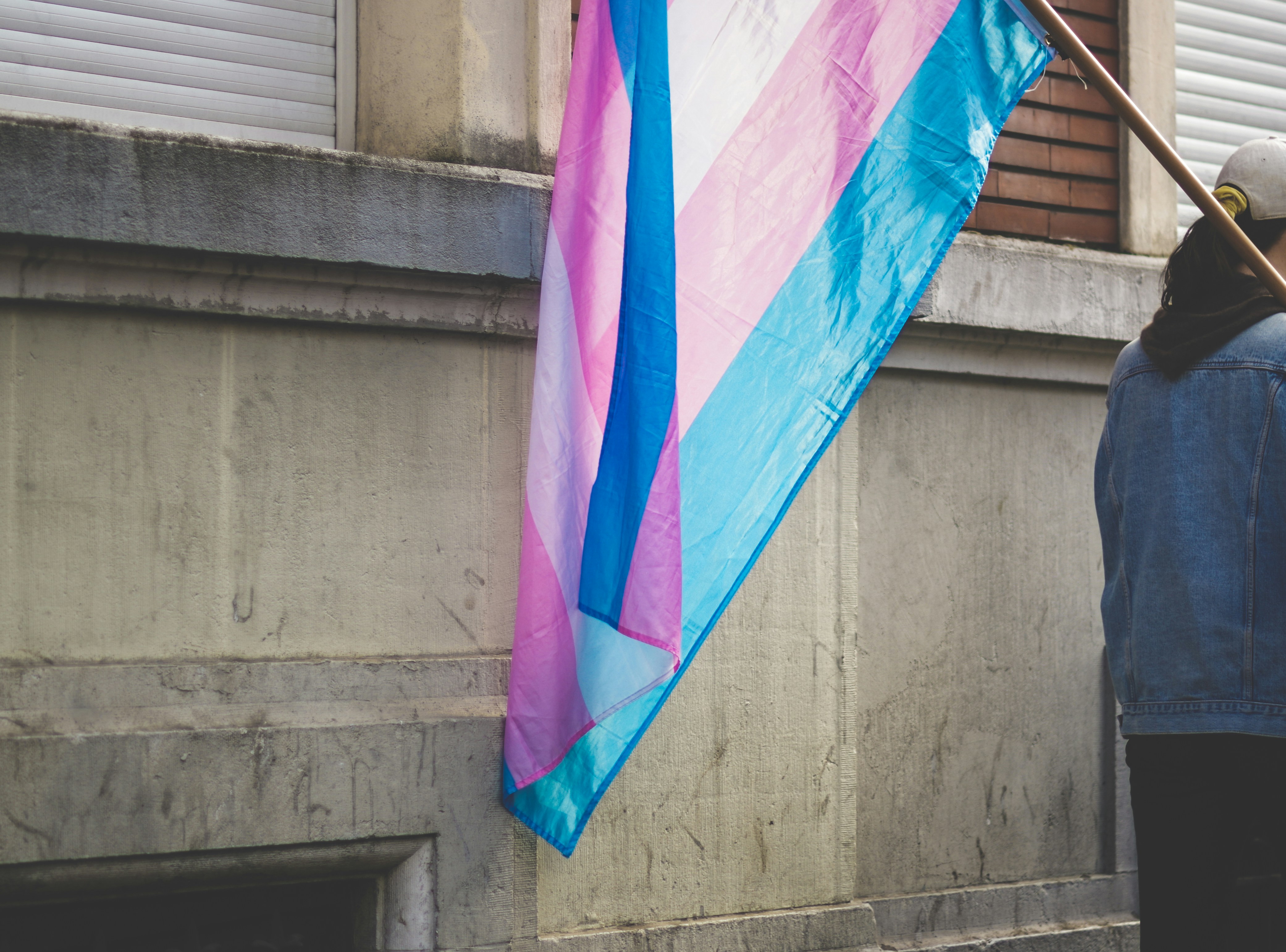
On 5 August 2026, the EHRC’s new Code of Practice on Services, Public Functions, and Associations will be enforced in England, Scotland, and Wales.
This new Code of Practice follows the Supreme Court ruling in 2025 that stated that access to single-sex spaces can be denied on the basis of “biological sex” (the sex you were assigned at birth).
In practice, this means that trans+ people could lawfully be excluded from single-sex (“male” or “female”) spaces.
The new advice could affect hospitals, shops, hotels, clubs, and other places where people gather or use services in public. It doesn’t affect employers or workplaces.
Trans-led organisations have called the guidance “harmful, unworkable, and unacceptable”.
But despite major concerns about how this Code will impact trans+ people in Britain, in a devastating blow, it came into force without any Parliamentary vote or debate.
For many trans, non-binary, intersex, and gender non-conforming people, this is an incredibly confusing and anxiety-inducing time.
Whatever you’re feeling right now is understandable – there is space for it here.
We’ve written this guide to break down what the EHRC guidance means, what it actually changes (and doesn’t change) about the law, and where you can get support as a trans+ person – or offer support, if you’re an ally.
We are not lawyers, and this guide is not legal advice. It’s a brief explainer on the new guidance, and an offering of solidarity and support.
What is the EHRC?
EHRC stands for Equality and Human Rights Commission.
The EHRC is an independent regulatory body that makes sure that the Equality Act 2010 is enforced in England, Scotland, and Wales.
What is the Equality Act 2010?
The Equality Act 2010 is the law that protects us all from discrimination in England, Scotland, and Wales.
This law makes it illegal for anyone to be discriminated against on the basis of nine protected characteristics: age, disability, gender reassignment, marriage/civil partnership, pregnancy/maternity, race, religion/belief, sex, and sexual orientation.
What is EHRC guidance?
The EHRC publishes guidance to advise people, businesses, and public authorities on how to follow the Equality Act 2010.
The Code is not law – it is legal advice about how to follow the law.
The chair of the EHRC, Mary Ann Stephenson, has said: “We are not deciding what the law should be. Parliament does that... We are just providing guidance for service providers on how they can best follow the law.”
This latest update to the EHRC’s Code of Practice is the first in more than 10 years.
It contains advice relating to all of the protected characteristics in the Equality Act 2010, not just trans+ people.
But the advice on single-sex spaces is the part that’s getting the most attention right now, because the guidance is changing following the Supreme Court ruling in 2025.
What did the Supreme Court rule in 2025?
In April 2025, in the case of For Women Scotland vs Scottish Ministers, the Supreme Court ruled that “sex” in the Equality Act 2010 refers to “biological sex”.
The term “biological sex” refers to the sex (“male” or “female”) that was assigned to you at birth.
So, according to this ruling, sex-based protections could only be given on the basis of your sex assigned at birth – not Gender Recognition Certificates (GRCs).
Previously, if you had a GRC, it meant that you would be treated as the sex given on your GRC under equality law.
But following this ruling, a trans woman or man with a GRC could now be excluded from a “female” or “male” space, under equality law.
This ruling created confusion and fear for trans people with and without GRCs, and for non-binary, intersex, and gender non-conforming people.
For anyone who doesn’t conform to cis, binary gender norms, it’s understandable that this ruling may have created anxiety about the lack of clarity around how exactly single-sex spaces might be policed on the basis of “biological sex”.
The only clear thing about this ruling was that it would make public life harder to navigate for trans+, non-binary, and intersex people in Britain.
The EHRC’s new Code of Practice is intended to explain how this ruling should impact the way that service providers, public authorities, and associations manage single-sex spaces.
What is the EHRC guidance on single-sex spaces?
Below is a summary of what the EHRC guidance says about single-sex spaces. For some, this might be upsetting or difficult to read.
If you find this too much right now, it’s okay to step away and take a break – be kind to yourself.
The new EHRC Code of Practice says that:
- In light of the Supreme Court ruling, “sex” refers to “biological sex”, or sex assigned at birth. This is not changed by having a GRC.
- Single-sex spaces (for example toilets, changing rooms, clubs, or sports teams) should operate on the basis of sex assigned at birth.
- Single-sex spaces should be offered where it is a “proportionate means of achieving a legitimate aim”.
- This means that providers should consider why the single-sex space needs to be single-sex (for example, for reasons of privacy, dignity, or safety), and should also try to make sure trans+ people have alternative options to use.
- This means that providers should try to offer gender-neutral or mixed-sex toilet facilities, for example.
- Providers should also explicitly communicate their policies, so that people can make informed choices about which facilities to use.
- Providers should also “consider whether the disadvantage to trans people, and any other people who may be disadvantaged, outweighs the benefits of achieving the legitimate aim”.
Trans+ people are still protected by the Equality Act 2010, which still includes gender reassignment as a protected characteristic.
This means that it’s still unlawful to discriminate against a trans+ person for being trans+.
Stonewall and other organisations have criticised the guidance for not making it clear enough how providers can implement this guidance without discriminating against trans+ and gender non-conforming people.
Note: this Code of Practice also doesn’t impact employers and workplaces. These are covered by separate guidance, which has not yet been updated.
So, what is actually going to change on 5 August 2026?
Right now, it’s unclear exactly how this new guidance will change services, and impact the day-to-day lives of trans+ people.
We will have to wait to see how different businesses, clubs, and public authorities choose to interpret or enforce the guidance.
But LGBTQ+ and trans+ organisations have voiced strong, valid concerns about what this might mean for trans+ and gender non-conforming people.
The LGBT Foundation has said that we need more “clarity and safeguards” – otherwise, the new EHRC guidance “leaves too much discretion in the hands of individual service providers to determine if they will jump through the hoops needed to justify them being trans inclusive”.
Scottish Trans have even more strongly condemned the guidance, saying that it “treats trans people as second class citizens and as essentially a ‘third sex’”, and in the process, ignores their “dignity and human rights”.
It’s understandable if you’re feeling worried or anxious about what happens next. That is part of the harm caused by this new EHRC guidance: it’s contributing to an environment in which many trans+ people feel uncertain and unsafe.
Knowledge is power, so for more detailed guidance on the guidance, one good source to follow is The Non-Binary Barrister.
As a trans person, which bathroom should I use?
The question of which public bathroom to use will be on the minds of many trans+ people as the new EHRC guidance comes into force.
The answer to this question is individual and case-by-case. It comes down to your personal choice, as it’s ultimately a question of bodily autonomy and safety.
Many trans+ people will have fears about being outed, or other fears for their personal safety, when using the bathroom.
Which choice makes sense for you will likely depend on where you are, and what policies that establishment has in place.
Remember, all establishments should offer gender-neutral facilities or other alternatives, if not allowing trans+ people to use single-sex facilities.
There is no criminal law preventing trans people from using single-sex bathrooms.
And you are still protected by the Equality Act 2010 – it is illegal to discriminate against you on the basis of being trans+.
To find an inclusive, unisex bathroom near you, try the OpenLavs map (run by the brilliant organisation FiveForFive).
Where to get trans-affirming support
It makes sense if you feel the need to speak to someone empathetic right now. Here are some organisations and helplines that offer gender-affirming support:
- Switchboard: The LGBTQIA+ helpline, available from 6pm: 0800 0119 100.
- Gendered Intelligence: Trans-led organisation offering support groups and a helpline.
- Mindline Trans+: Helpline available on Friday evenings for all trans+ people, run by the mental health charity Mind: 0300 330 5468.
- TransUnite: Organisation helping trans+ people find support groups locally.
- LGBT Foundation: National charity for LGBTQ+ health, with a helpline open Monday to Friday: 0345 330 30 30.
- Mermaids: Charity supporting trans+ people under the age of 18 and their parents and loved ones. Helpline: 0808 801 0400.
Mental health resources for trans+ people
You can also use Voda, the LGBTQIA+ self-care app, to access a whole library of free mental health resources for trans+ and non-binary folks.
Our Trans+ Library offers modules on trans+ history, building mental resilience, and radical self-care.
You can also use Voda for journalling, breathing exercises, and queer-led meditations.
None of this can make the context of systemic transphobia that we live within disappear. But it’s a tool you can use to help stay grounded as you seek out support and community.
Download it here via Google Play and on the App Store.
As an ally, how can I support trans people right now?
It’s more important than ever to stand alongside our trans+, non-binary, and intersex siblings in solidarity, in public and in private.
As this EHRC guidance comes into force, cis people can:
- Contact your MP to talk about your concerns. Find your MP here, and look at this template from the Trans Legal Clinic for inspiration (but bear in mind that this was written before the new guidance came into force). Even better, the Trans+ Solidarity Alliance is organising a Mass Lobby at Parliament on Wednesday 9 September. Find out all the details, and ask your MP to show up to meet with you, here.
- Advocate for trans rights in your workplace – are your workplace’s policies inclusive for everyone?
- Challenge transphobic talking points when you hear them. If you feel safe to do so.
- Listen to and uplift trans+ voices. This is always important, but especially right now: we need to hear from trans+ people about the impact of this new guidance.
Read our article on how to be a trans ally for more tips on how to show up in solidarity.