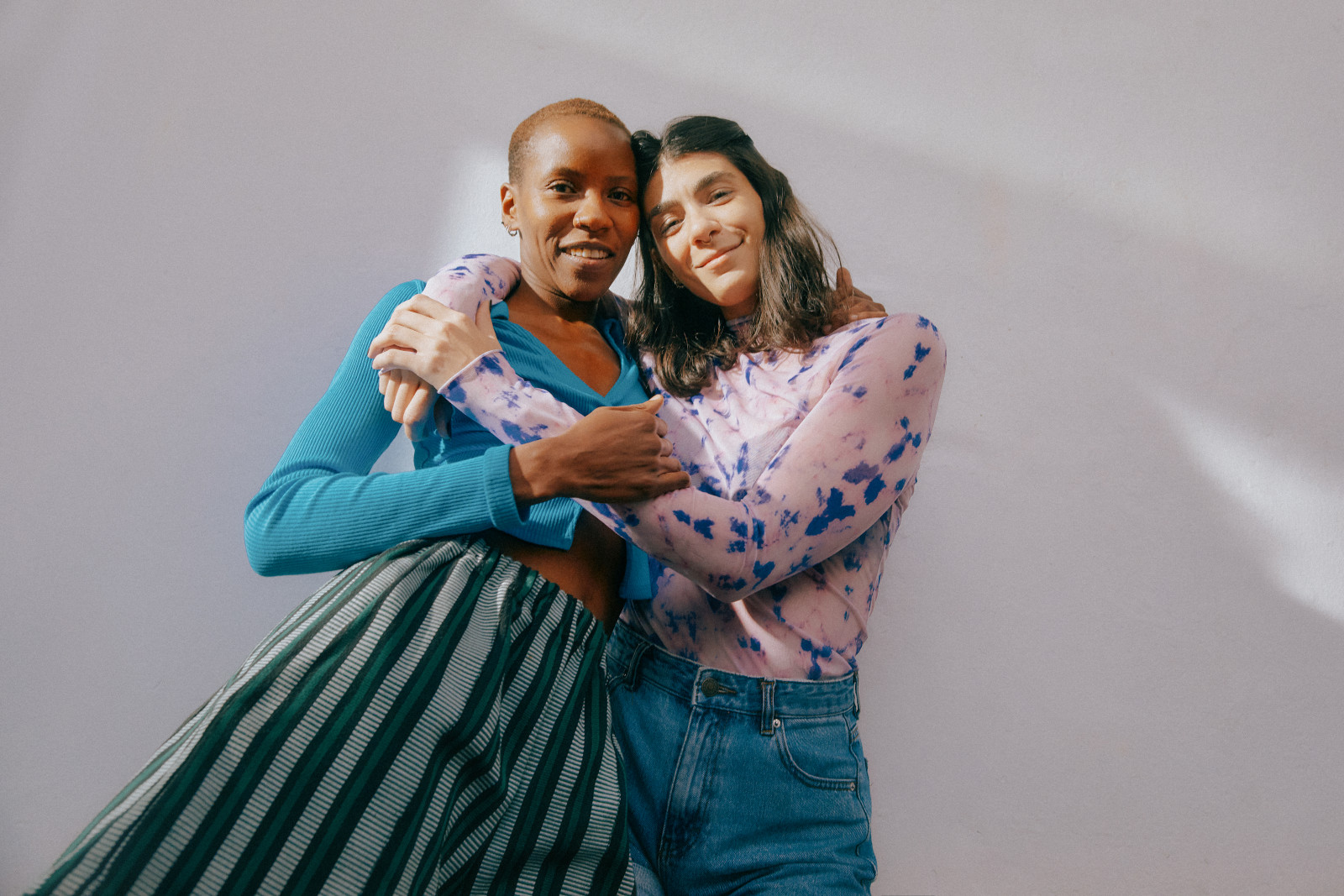
Exploring your gender identity can be a confusing, uncomfortable, and lonely process. It can also be joyful, liberating, and full of excitement.
Wherever you are in your journey, and however it feels for you: you're welcome here.
On this page, you'll find a bit more information about what gender identity is, what exploring it might look like, and some questions that might help you along in your search for understanding.
What is gender identity?
Gender identity is the way you feel about your gender. It's an innate sense of being a man, woman, non-binary, something else, or even having no gender at all.
When we're born, most of us are assigned a sex (male or female) based on the physical appearance of our genitals.
This is sometimes called your ASAB (Assigned Sex At Birth). (Some people in the community also refer to it as AGAB, or Assigned Gender At Birth.)
Your ASAB is then usually taken to mean your gender. It is assumed that if your ASAB is female, for example, you're a woman.
Your gender identity doesn't have to match your ASAB. You might grow up to realise that you feel more aligned with a different gender identity than the one you were assigned. That's what it means to be transgender.
There are many different gender identities out there: non-binary, genderfluid, genderqueer, agender, demi-boy, and demi-girl, to name just a few.
What does this mean for intersex people?
Intersex people are those with sex characteristics that can't be neatly categorised into "male" or "female".
Sometimes this is known at birth, but often people might discover that they're intersex later in life.
If you're intersex, it's likely that you were still assigned a sex – "male" or "female" – at birth. Just like anyone else, you might find that your gender identity fits with your ASAB, or doesn't.
Intersex people can be cisgender, transgender, genderqueer, agender, and anywhere else on the gender spectrum.
What is my gender?
Only you can know and decide what your gender identity is.
If you've found your way to this page, you might be on a voyage of discovery with your gender identity.
For some, it can be a long, non-linear journey to work out if you are cisgender, transgender, or anything beyond or between those identities.
How you feel about your gender might change over the course of your life, or even day to day. It could be fluid, or it could be fixed.
Below are some definitions of some terms to do with gender identity – you might want to read through them, and notice what feelings they stir up for you.
- Cisgender: a word to describe people whose gender identity aligns with their ASAB.
- Transgender: a word to describe people whose gender identity doesn't align with their ASAB.
- Non-binary: an umbrella term covering all gender identities that fall outside of the "man" and "woman" binary.
- Agender: a term for people who don't feel connected to a gender identity at all.
- Genderqueer: a word for the experience of a "queer" gender identity – as in, one that doesn't conform to normative expectations, and likely falls outside of the binary.
For more, check out Stonewall's full glossary of LGBTQ+ terms.
_Nick_Fancher_Photos_ID4491.jpg)
How do I know if I'm trans?
Only you can know what your gender identity is, and how you would like to express your gender.
For many of us, working that out is a journey – and not always a straightforward one.
That's okay. Exploring your gender identity is a quest that's entirely your own. You can take it at your own pace, and follow your own map.
Signs that you might be transgender
Being transgender is different for everyone.
There is no single list of "signs" that could apply to every trans person – in the same way that not every gay person, British person, or person of colour shares the same experiences as one another.
But if you've found your way to this page, you might be searching for clarity. That in itself is information: it shows that something in you wants to be heard.
Below are some other signs that transgender people have shared about themselves.
You may not resonate with some or all of the list – that's okay, and it doesn't mean anything necessarily. As you read, pay attention to the feelings that come up for you.
How you feel is your biggest sign of all.
- Desire for different clothing, styling, or characteristics.
- Discomfort with being referred to by your given name or pronouns, or gendered terms like "sir" or "ma'am".
- Feeling uncomfortable in your body – whether this is specifically about gender, or a more general sense of feeling "wrong".
- Feeling envious of people of different genders to yourself.
- Feeling disconnected from the roles or expectations placed on you because of your assigned gender at birth.
- Wanting to be referred to by a different name and pronouns.
- Fantasising about being a different gender.
Remember, this is not a complete or concrete list – no such thing exists.
Whether you find yourself relating to everything on this list or none of it, the only person who is allowed to decide your gender identity is you.
How to explore your gender identity
Exploring gender can take countless different forms. For some, it may be a clear path, and for others, it may be a bumpy or winding road.
How you choose to go about your own journey of discovery is completely personal to you.
Here are some ideas, based in the experiences of other trans and gender-diverse people and advice from therapists, on ways to explore how you feel about gender.
- Talk to people you trust about how you feel. Particularly other LGBTQ+ people, people who make you feel safe, and people who you know have positive views about trans people.
- Seek out diverse gender stories. Find and consume books, films, and TV shows that reflect diverse experiences of gender. Notice what these stories spark for you.
- Try out different labels, names, or pronouns. In safe spaces – or in anonymous spaces, like ordering your coffee – you might try asking others to refer you differently. Pay attention to how it lands with you.
- Experiment with clothing, hair, and make-up. Playing with your self-expression can reveal and unlock feelings about gender for some people.
- Speak to a therapist. An LGBTQ-affirmative therapist can support you as you journey through this self-discovery. You don't have to do it alone.
Remember: this is not an exhaustive list, and you do not have to try every point on the list.
There is no "checklist" for being trans, as there isn't for being cis. You get to choose what feels right or helpful for you.
For more ideas for reflection, check out this zine from writer Meg-John Barker.
Questions to ask when exploring your gender identity: 8 journal prompts
Below are eight questions designed to prompt reflection as you explore your gender through journalling.
Don't rush through these – the idea is to spend a bit of time with them, and make space for thoughts, memories, and feelings to pop up.
Feel free to bookmark this page, and revisit these prompts as often as you need to.
- What are my earliest memories related to my gender? How do they feel?
- What have I been taught that "feminine" and "masculine" mean?
- Do I feel more feminine or masculine, or somewhere between or beyond those two options?
- How has my relationship to my gender evolved through my life?
- How does my gender shift in different contexts and places (if at all)?
- When others describe me, which words feel euphoric or joyful, and which feel uncomfortable?
- How do I express my gender in my appearance – or how would I like to express it?
- When and where do I feel most fully like I am myself?
For more exploration, you might try using the Gender Construction Kit.
Explore your gender identity with Voda
Voda is the LGBTQ-affirming mental wellbeing app that's built by us, for us.
Wherever you are in your gender journey, you can use Voda's journalling and regulation tools to support you as you find your way.
Our Practices and Insights offer short, five minute bursts of comfort and reflection, with exercises specifically designed by LGBTQ+ therapists.